I’ve been using DeWalt power tools for over 20 years, and over that time I’ve also owned several Makita tools, including a combi drill, a circular saw, and a range of garden tools. This comparison is based on long term, real world use rather than brand loyalty or marketing claims.
While the majority of my toolkit now comprises of DeWalt power tools, I wouldn’t discard Makita as a reputable brand. I purely went down this route due to how impressed I was with my first combi drill, which was the DeWalt DW925. It saw me through 9 years of daily use as an AV technician.

DeWalt and Makita are consistently regarded as two of the best power tool brands on the market, trusted by professionals and serious DIY users alike. Both offer reliable performance, strong battery platforms, and an enormous range of compatible tools, which is why so many people find themselves choosing between the two.
If you are upgrading from basic tools or committing to a cordless system for the first time, this decision matters more than it seems. Once you invest in batteries and chargers, you are usually locked into that ecosystem for years, so it makes sense to understand how each brand differs in everyday use.
Read on to see which brand stands out above the other on paper and which brand the user community prefer.
In this guide, I will focus on the things that genuinely matter when you are using these tools day to day, including power delivery, battery performance, comfort, and long term value. To keep things practical, I will start with one of the most important tools in any kit, the cordless drill driver, and look at how DeWalt and Makita compare in real use.

History
Briefly on background, Makita has a long reputation for well balanced tools, smooth operation, and excellent ergonomics. DeWalt, by comparison, leans heavily into durability and power, with tools designed to cope with harsher working conditions. Both approaches have stood the test of time.
Here are my two drills that have been a big part of my career as a handyman.

Key Comparison – The Stats on Paper
Let’s take a look at two of these brands’ most popular tools to see which stands out in terms of the specs we see on paper. For this I’m comparing current models available in Screwfix and Amazon.
Comparing the Entry Level Makita and DeWalt Combi Drills
| Specification | Makita DHP482Z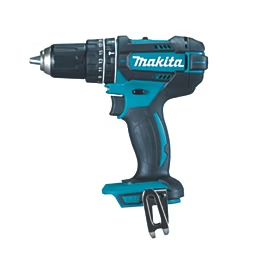 | DeWalt DCD778M1T |
|---|---|---|
| Voltage | 18V | 18V |
| Battery Platform | Makita LXT | DeWalt XR |
| Motor Type | Brushed | Brushless |
| Max Torque | 62 Nm | 65 Nm |
| No Load Speed | 0 to 600 / 0 to 1900 rpm | 0 to 1750 rpm |
| Impact Rate | 28,500 bpm | 29,750 bpm |
| Torque Settings | 21 | 15 |
| Chuck Type | 13 mm keyless | 13 mm keyless |
| Tool Length | 198 mm | 240 mm |
| Weight | 1.2 kg without battery | 1.2 kg withoutbattery |
| Warranty | 1 year | 3 years with registration |
Makita vs DeWalt Combi Drill Comparison Overview
- As a quick reference point here, both combi drills with hammer action perform to a very similar standard.
- Makita has the fastest load speed, more torque settings and a shorter body length which can be useful for tight spaces.
- DeWalt has a higher max torque, higher impact rate and a longer warranty, which is good to peace of mind.
- Personally, I’d prefer a combi drill with higher torque and impact rate for tougher jobs. Having an extended warranty would also be a preference for me.
- Some may prefer the shorter body on the Makita for a more compact tool.
Comparing the Entry Level Makita and DeWalt Circular Saws
| Specification | Makita DSS611Z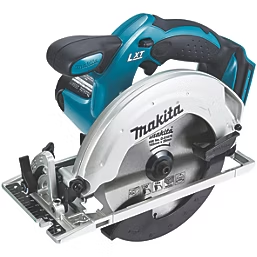 | DeWalt DCS391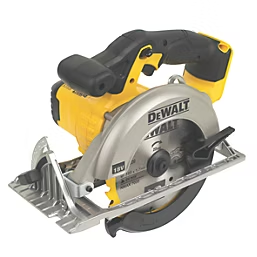 |
|---|---|---|
| Voltage | 18V | 18V |
| Battery Platform | Makita LXT | DeWalt XR |
| Motor Type | Brushed | Brushed |
| Blade Diameter | 165 mm | 165 mm |
| Blade Bore | 20 mm | 20 mm |
| No Load Speed | 3,700 rpm | 5,150 rpm |
| Max Cutting Depth at 90° | 57 mm | 55 mm |
| Bevel Capacity | 0 to 50° | 0 to 50° |
| Number of Teeth (supplied blade) | 16T | 24T |
| Tool Length | 347 mm | 360 mm |
| Weight | 2.9 kg without battery | 3.2 kg without battery |
| Warranty | 1 year | 3 years with registration |
Makita vs DeWalt Circular Saw Comparison Overview
- DeWalt has a much faster No Load Speed which is superior to the Makita. Power makes a difference when cutting tough or thick material.
- Makita holds the edge in terms of cut depth, but there’s only 2mm in it. It also beats the DeWalt in terms of size and weight, which makes it more appealing for extended use.
- The standard blade supplied on the DeWalt is 24 tooth, which makes for a smoother cut on wood.
- A 3 years warranty stands out on the Dewalt
- Personally, I’d prefer the DeWalt based on the power and extended warranty.
Having reviewed these stats, I stand by my decision to invest in the DeWalt XR range of tools, although it’s very close between the two.
Key Considerations – What the Community Think
Apart from my own personal preferences, I’ve dug around online to see what other users prefer and why. Here’s a quick summary of our combined thoughts:
- Battery Life and Capacity:
- Both Makita and DeWalt offer 2.0, 4.0, 5.0, 6.0 and 8.0Ah battery packs. The larger the capacity the longer use is available. Just note that the 5, 6 and 8.0 Ah battery can be very heavy with prolonged use like installing decking screws etc.
- DeWalt’s batteries are generally lighter, which might reduce user fatigue.
- Torque and Performance:
- DeWalt tools are noted for their high torque, which can be crucial for heavy-duty tasks. Users have found DeWalt drills to handle more demanding situations better due to this feature.
- Makita also delivers robust performance, but the slightly lower torque might not be noticeable for typical DIY tasks.
- Ergonomics and Usability:
- Both brands score well on ergonomics, ensuring comfortable use over long periods. However, individual preferences for tool balance and grip can vary.
- Some users emphasize that ergonomics is more important than raw power for most DIY projects.
- Range of Tools:
- Makita is often favoured for its extensive range of garden tools, making it a versatile choice for those who might expand their tool collection to outdoor equipment.
- DeWalt is praised for its advancements in battery technology and a comprehensive range of small battery tools, offering great flexibility for various indoor projects.
- Brand Loyalty and Battery Ecosystem:
- Once users invest in a brand, they often stick with it due to battery compatibility across different tools. And when your next step is finishing or smoothing surfaces, you might be asking: what is the best belt sander in the UK? Therefore, consider future tool purchases and the broader ecosystem of tools each brand supports.
- Durability and Reliability:
- Both brands have a reputation for durability. Users report that both DeWalt and Makita tools can withstand significant wear and tear, making them suitable for frequent DIY use.
- Anecdotal evidence suggests both brands’ tools survive drops and intensive use, with some users reporting incidents like motors burning out under heavy use but continuing to function afterwards.
Personal Preferences and Miscellaneous Factors
- Colour Preference: Surprisingly, some users choose based on colour: DeWalt’s yellow or Makita’s blue-green.
- Trade Opinions: Both brands are respected in professional trades, which speaks to their reliability and performance.
- User Testimonials: Some DIYers prefer Makita based on positive experiences and recommendations from trusted sources, while others lean towards DeWalt for its slightly better handling of tougher jobs.

Conclusion: Which Should You Buy? DeWalt or Makita?
As a professional handyman and keen woodworker, I am split between both brands. Both have their merits. However, based on the stats of the above-mentioned models, I would lean towards DeWalt. Importantly, though, Makita do tend to prioritise comfort over power and torque, which some users may prefer.
For woodworking projects and general home maintenance, I always use my DeWalt range of tools. When I’m involved in garden maintenance projects I tend to lean towards Makita.
For a DIY enthusiast, both DeWalt and Makita present compelling choices that can significantly enhance your toolset. The decision between the two brands hinges on several key factors tailored to your specific needs and preferences.
- Tool Torque: If you value power over comfort, chose DeWalt
- Ergonomics and Personal Comfort: If you value comfort over power, chose Makita
- Future Expansion: Makita does have a larger overall cordless tool lineup, with over 325 tools in the LXT range
- Durability and Reliability: DeWalt offers an extended 3-year warranty, which is very appealing
- Brand Ecosystem: Makita has an excellent spread of tools across multiple categories, including woodworking, metalworking, construction, automotive, and garden equipment, all supported by a well-established battery system.

Ultimately, you cannot go wrong with either brand. Both DeWalt and Makita sit well above entry-level options like Ryobi or Black and Decker in terms of performance, durability, and long-term reliability.
Personally, I lean towards DeWalt, simply because it has proven itself to me over more than 20 years of use. That said, if you place more value on a wider tool range and long-term comfort rather than outright power, Makita is a very sensible choice.
There is, however, one other brand worth considering. Milwaukee. It is now firmly established as a premium power tool manufacturer, with an excellent and ever-expanding cordless lineup. If you want to explore that option, you can read my full comparison between DeWalt and Milwaukee here.
Discover more from HandymanBen
Subscribe to get the latest posts sent to your email.