As a local handyman, I rely on tools that offer the right balance of power, control, durability, and value — and when it comes to selecting an impact driver, the choices can be overwhelming. With so many models on the market from trusted brands like Makita, DeWalt, Milwaukee, and Erbauer, it’s important to choose one that fits both your workload and your budget. I personally own a DeWalt impact driver, and it’s served me well — but given the chance, would I switch to another brand? Read on to find out which model stands out as the best impact driver for professionals, DIYers, and tradespeople alike.
Compatability
One of the most important factors is how the tool fits into your existing tool ecosystem. Most impact drivers today are sold as “bare units” (unless you’re buying a drill driver set), meaning they come without batteries or chargers. Investing in a tool range from the same manufacturer can significantly reduce your costs over time, as you can share batteries and chargers across multiple tools. This makes your toolkit more versatile and future-proof.

Beyond battery compatibility, you’ll want to evaluate key features like maximum torque, impact rate, speed settings, motor type (brushless vs. brushed), and ergonomics. Some models offer high torque for heavy-duty fastening, while others focus on precision and lightweight manoeuvrability. Ultimately, the best choice will depend on how you intend to use the tool, and how often.
In this article, I’ll compare four current popular models — the Makita DTD156Z, DeWalt DCF887N, Milwaukee M18 BLID2, and Erbauer EOPID1 and break down their specs, strengths, and user experience to help you make a smart, cost-effective decision.
🔧 Impact Driver Comparison Chart
Let me start by showing you a quick breakdown of the key statistics for each model.
| Specification | Makita DTD156Z | DeWalt DCF887N | Milwaukee M18 BLID2 | Erbauer EOPID18 |
|---|---|---|---|---|
| Voltage | 18V | 18V | 18V | 18V |
| Max Torque | 155 Nm | 205 Nm | 180 Nm | 180 Nm |
| No Load Speed | 0–2,500 rpm | 0–1,000 / 0–2,800 / 0–3,250 rpm | 0–1,700 / 0–2,600 / 0–3,400 rpm | 0–2,900 rpm |
| Impact Rate | 0–3,000 ipm | 0–3,800 ipm | 0–1,500 / 0–3,400 / 0–4,200 ipm | 0–3,300 ipm |
| Weight | 0.94 kg (without battery) | 0.94 kg (without battery) | 1.0 kg (without battery) | 1.2 kg (with battery) |
| Length | 143 mm | 134 mm | 130 mm | 150 mm |
| Motor Type | Brushed | Brushless | Brushless | Brushless |
| Speed Settings | Single speed | 3-speed with PrecisionDrive | 3-speed with DRIVE CONTROL™ | Single speed |
| Bit Holder | 6.35 mm (1/4″) hex | 6.35 mm (1/4″) hex | 6.35 mm (1/4″) hex | 6.35 mm (1/4″) hex |
| LED Light | Yes | Yes (3-LED Halo ring) | Yes | Yes |
| Battery System | Makita LXT 18V | DeWalt XR 18V | Milwaukee M18 | Erbauer EXT 18V |
| Brushless Motor | ❌ | ✅ | ✅ | ✅ |
🔍 Key Takeaways
- Makita DTD156Z: A reliable entry-level option with a brushed motor, suitable for general tasks. It offers 155 Nm of torque and a compact design.
- DeWalt DCF887N: Features a powerful 205 Nm brushless motor and 3-speed settings with PrecisionDrive, making it ideal for precision work and heavy-duty applications.
- Milwaukee M18 BLID2: Offers 180 Nm of torque with a compact 130 mm length. It’s 3-speed DRIVE CONTROL™ provides versatility for various tasks.
- Erbauer EOPID18: Delivers 180 Nm of torque with a brushless motor, suitable for DIY enthusiasts seeking a balance between performance and affordability.
Choosing the right impact driver means understanding what features matter most for your needs. Here’s a breakdown of the key features to consider when buying and comparing impact drivers:
🔍 Key Features to Consider When Buying an Impact Driver
1. Torque (Nm)
- What it is: The turning force the driver can deliver.
- Why it matters: Higher torque = better performance on tough fasteners and denser materials.
- Range to expect: ~150 Nm (light-duty) to 200+ Nm (heavy-duty).
2. Impact Rate (IPM)
- What it is: Impacts per minute — how fast the driver delivers concussive blows.
- Why it matters: Higher IPM helps drive screws faster, especially in tough materials like hardwood or metal.
3. No Load Speed (RPM)
- What it is: The driver’s maximum speed when not under load.
- Why it matters: A higher RPM means quicker fastener driving, but lower settings are useful for precision work.
4. Motor Type: Brushed vs. Brushless
- Brushless motors:
- More efficient
- Longer lifespan
- Quieter and cooler
- Brushed motors:
- Lower cost
- Require more maintenance
5. Speed Settings / Modes
- Why it matters: Multiple speed or torque modes allow you to match power output to the job, especially helpful when switching between delicate and heavy-duty tasks.
- Look for features like PrecisionDrive (DeWalt) or DRIVE CONTROL™ (Milwaukee).
6. Weight and Size
- Why it matters: A lighter, more compact driver is easier to handle, especially for overhead or prolonged use.
- Heavier models might offer more power but could cause fatigue over time.
7. Battery System Compatibility
- Tools are often sold as bare units.
- Buying into a brand ecosystem (e.g., Makita LXT, DeWalt XR, Milwaukee M18) lets you share batteries and chargers, saving money and space.
8. Ergonomics & Build Quality
- Consider grip comfort, trigger sensitivity, balance, and durability.
- Rugged designs with good LED lighting and quality bit holders add to usability.
9. Price vs. Performance
More expensive tools often offer better motors, longer life, and pro features — but a mid-range or budget model may be all you need for home use.
Makita, DeWalt, Milwaukee & Erbauer: Strengths and Weaknesses Compared
Let’s take a quick look at the pros and cons of each model to include some real user insights.
🟦 Makita DTD156Z

🧰 Best for: Budget-conscious users and light to medium DIY use
Pros:
- Compact and lightweight — easy to maneuver in tight spaces
- Reliable and durable build, as expected from Makita
- Excellent value for general tasks (screwing, decking, light assembly)
Cons:
- Brushed motor = shorter lifespan and more maintenance than brushless
- Lower torque (155 Nm) compared to the others
- Only single-speed — no precision control
User Insight:
“Great tool for DIY and small jobs — gets the job done without breaking the bank. I wouldn’t use it all day on a job site, though.”
Verdict: 🟢 A solid entry-level tool, but lacks the versatility and performance needed for heavier tasks.
🟨 DeWalt DCF887N

🧰 Best for: Professionals and heavy-duty applications
Pros:
- Highest torque in this group (205 Nm) — great for tough fastenings
- 3-speed settings + PrecisionDrive = excellent control and finesse
- Highly praised build quality and ergonomic comfort
- Compact size with powerful punch
Cons:
- Slightly more expensive (bare tool)
- Can feel a bit “aggressive” on lower torque tasks if not on PrecisionDrive mode
User Insight:
“Perfect blend of power and precision. Use it every day on site and never lets me down — the PrecisionDrive saves screw heads too.”
Verdict: 🟢 Best-in-class for versatility, power, and professional-grade performance.
🟥 Milwaukee M18 BLID2

🧰 Best for: Tradespeople wanting power and durability with speed options
Pros:
- 3-speed DRIVE CONTROL™ offers flexible control
- Delivers 180 Nm with compact size and brushless efficiency
- Compatible with large M18 ecosystem
- Renowned Milwaukee toughness — built for jobsite abuse
Cons:
- Pricier than Erbauer or Makita
- Some users note it’s noisier under load
- Bare tool weighs slightly more than competitors
User Insight:
“Super reliable. The 3-speed modes let me tailor it perfectly — solid performer that takes a beating.”
Verdict: 🟢 Very close to DeWalt in performance, and better suited if you’re already in Milwaukee’s tool ecosystem.
🟩 Erbauer EOPID18
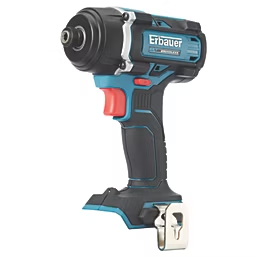
🧰 Best for: DIYers who want brushless power on a budget
Pros:
- Offers brushless motor and good torque (180 Nm) at a lower price point
- Compatible with Erbauer EXT system (decent for DIYers)
- Performs well in general fastening and construction tasks
Cons:
- Slightly heavier and bulkier than premium models
- Fewer advanced features (e.g., no multi-speed)
- Not ideal for sustained professional use
User Insight:
“Great value for weekend projects. Does everything I need, though it’s not as refined or fast as a DeWalt or Milwaukee.”
Verdict: 🟢 Strong budget option with good power and durability, ideal for non-pro users.
🧾 Conclusion: Why Choose One Over the Other?
| Tool | Choose If You Want… |
|---|---|
| Makita DTD156Z | Simplicity, affordability, and lightweight design for light work |
| DeWalt DCF887N | Top-tier performance, speed options, and pro-grade reliability |
| Milwaukee M18 | Heavy-duty durability with flexibility and M18 battery compatibility |
| Erbauer EOPID18 | Good power and brushless tech at a lower cost for occasional use |
Once you’ve picked your impact driver, you’ll need a solid way to transport and organise it—check out my head-to-head on the best modular storage systems to see which one holds up on the jobsite.
Final Thoughts: Would I Switch from My DeWalt Impact Driver?
As a part-time handyman, I rely on my tools to be dependable, versatile, and ready for a wide range of jobs — and my DeWalt impact driver consistently delivers. It’s the second most-used tool in my kit after my DeWalt drill, and it’s been an essential companion on projects like decking installations, where power and control really matter. For my needs, it offers the perfect balance of performance and reliability at a very competitive price point.
While I do admire brands like Makita — and have owned their tools in the past — I don’t see a strong reason to switch. DeWalt has rarely let me down, and when you factor in the longevity (my last DeWalt drill lasted around 10 years of daily use), it’s hard to argue with the value. At around £100, that works out to about £10 per year for a top-performing tool — a solid investment by any measure.
If I were working full-time on a job site, I might consider the Milwaukee, simply because of its heavy-duty build and excellent speed/torque control. But for my current workload and frequency of use, the DeWalt ticks all the right boxes.
As for Erbauer, I haven’t used their tools myself, and I don’t personally know any tradespeople who rely on them. They seem more geared toward the DIY market, offering decent specs and good value, but I’d hesitate to use one in a professional setting without first-hand experience or strong word-of-mouth from fellow trades.
In the end, choosing the right impact driver comes down to how you use it, how often, and what platform you’re already invested in. For me, DeWalt continues to prove its worth — and for now, I’m sticking with what works.


If you’re curious how Milwaukee’s PACKOUT stacks up against DeWalt’s ToughSystem for carrying your new driver, see my full Milwaukee PACKOUT vs. DeWalt ToughSystem breakdown.
Discover more from HandymanBen
Subscribe to get the latest posts sent to your email.